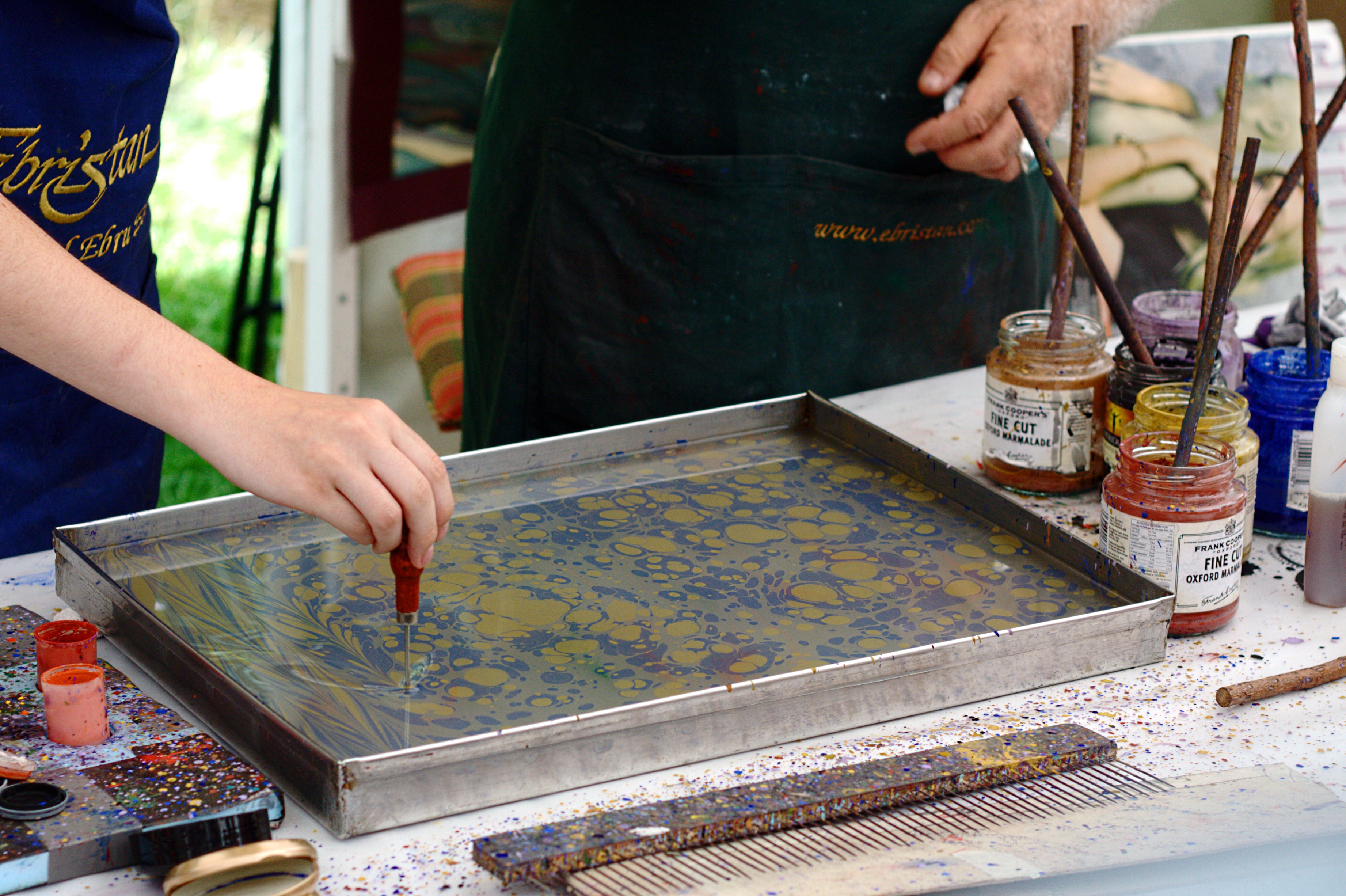
Paper Marbling
Paper Marbling Techniques for Canadian Bookmakers
Carrageenan preparation, paint selection, combing patterns, and the regional water chemistry considerations that affect results in Canadian studios from coast to coast.
Read article →Handmade Paper Arts & Bookbinding — Canada
Notes on paper marbling, letterpress craft, Japanese stab binding, and Coptic bookbinding — drawn from the practices of artisans working in studios across British Columbia, Ontario, and Quebec.
Referenced by Canadian arts and crafts bodies
Core Techniques
From the carrageenan tanks of Vancouver marbling studios to the wooden type drawers still in use at letterpress shops in Montreal, Canada's handmade paper arts scene spans traditions carried from Europe and Japan over two centuries.
Paper Marbling
Paper marbling involves floating oil-based or watercolour paints on a thickened water surface — typically carrageenan solution — then drawing them into patterns with a stylus or comb before laying paper onto the surface to lift the design. Canadian practitioners commonly source Irish moss (Chondrus crispus) carrageenan from Atlantic suppliers or Nova Scotia marine-product processors.
Letterpress
Letterpress printing transfers ink from a raised surface — movable type or photopolymer plates — directly onto paper under significant pressure. The characteristic impression left in the sheet is a tactile quality that offset lithography and digital printing cannot replicate. Operating presses survive in studios across Toronto, Victoria, and Halifax.
Bookbinding
Japanese stab binding sews through holes pierced along the spine edge of folded or stacked pages, leaving the stitching visible on the outside of the book. Coptic binding, developed in Egypt in the first centuries CE, creates a flexible book that opens flat — a property valued by sketchbook users and fine press bookmakers alike. Both techniques are actively taught in Canadian craft schools.
The quality and behaviour of carrageenan solution — the size that keeps paint afloat during marbling — varies with water hardness, temperature, and the carrageenan variety used. Canadian tap water in cities like Calgary (very hard) behaves differently from Vancouver water (soft), which affects carrageenan concentration, paint spreading, and the clarity of transferred patterns. This guide covers what changes between regions and how experienced practitioners adjust.
Read the marbling guideLatest Articles
Paper Marbling
Carrageenan preparation, paint selection, combing patterns, and the regional water chemistry considerations that affect results in Canadian studios from coast to coast.
Read article →
Letterpress
From Confederation-era newspaper presses to photopolymer plate studios in modern Canadian cities — the history of letterpress printing and where the craft stands today.
Read article →
Bookbinding
Step-by-step structure and material notes for two traditional binding methods widely practised in Canadian bookbinding studios and taught in continuing education programmes.
Read article →Many of the largest surviving collections of movable type in Canada — held by print shops, universities, and private studios — were acquired in the 1980s and 1990s when commercial letterpress operations closed. A number of those collections are now changing hands again. Organizations like the Canadian Bookbinders and Book Artists Guild and the Alcuin Society document these transitions and connect collectors with institutions that can preserve type for active use.
Letterpress history overviewQuick Reference
Carrageenan is a polysaccharide extracted from red algae — primarily Irish moss (Chondrus crispus) and related species. In paper marbling, it is dissolved in water to create a viscous "size" that supports floating paints. Standard preparation calls for approximately 2–3 tablespoons of carrageenan powder per gallon of cold water, left to hydrate overnight. Concentration varies by water hardness and ambient temperature.
In bookbinding, a signature is a folded section of pages — typically 4 to 8 sheets folded together — that forms one sewn unit of a book. Coptic binding sews multiple signatures together through a chain stitch, leaving the thread visible on the spine. Japanese stab binding does not use signatures; instead it binds a stack of single or folded sheets by passing thread through holes pierced close to the spine edge.
In letterpress printing, "impression" refers to the depth at which type or a plate is pressed into the paper. A deep impression — sometimes called "bite" — creates the characteristic indented texture associated with fine letterpress work. The depth of impression is controlled by packing (material placed under the printing surface) and by the pressure setting of the press. Too deep an impression on thin paper causes "strike-through," where the indentation is visible on the reverse side.